The Matching Furniture Myth: Why a Room Need Not Come as a Set
Matching furniture does not require a coordinated suite. Learn how repeated shapes, tones and materials connect separate pieces into a room with character.
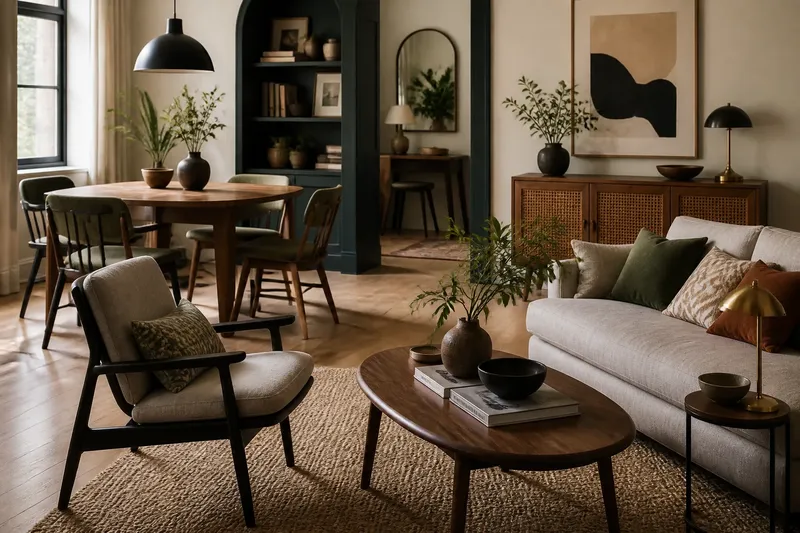
The common mistake with matching furniture is buying a coordinated suite before deciding what the room needs. It can leave you with several pieces that agree with one another but do little for the space; replacing one later can make the rest feel oddly stranded. A room can read as coherent without every chair, table and cabinet arriving from the same catalogue page.
Visual connection comes from recognizable relationships: a repeated curve, a shared wood tone, or a material that appears in more than one place. These are not rules for assembling a disguised suite. They are ways to give distinct pieces enough in common to feel considered.
1. What does a furniture set actually match?
A coordinated furniture set typically repeats finish, profile and detailing across multiple pieces. That makes the relationship obvious, but it also means the furniture shares the same visual voice. In a room with little else to offset it, the result can feel more like a display than a collection shaped around daily life.
The useful distinction is between a match and a connection. A match copies the same finish or design; a connection repeats one feature while allowing others to differ. A walnut dining table, for example, might sit comfortably beside chairs with dark-stained frames if their lines echo the table’s sturdy proportions. The pieces need not be identical in wood species or maker.
Start by asking what you want to repeat, then let other qualities vary. A shared tone can link furniture with different silhouettes. A repeated curve can soften pieces in contrasting finishes. This selective agreement gives the eye a route through the room without making every item answer to the same pattern.
2. How do repeated shapes connect separate pieces?
Shape is often the least literal way to create unity. Rounded chair backs, an oval coffee table and a cabinet with softened corners can share a gentle outline even if their colours and materials are different. The connection is visible from across the room, where fine grain and hardware may disappear.
Look at the outer contours rather than decorative details. A narrow, tapered leg on a side table can relate to tapered chair legs; a curved arm can repeat the arc of a mirror frame. One repeated shape is usually enough. If every edge is rounded, the effect can become a theme rather than a quiet relationship.
Say you have a rectangular oak dining table and want to add a pair of second-hand chairs with curved backs. Imagine choosing chairs whose legs also taper slightly, while their upholstery and finish differ from the table. The expected result is a visible link in silhouette, with enough difference to keep the chairs from looking like an incomplete set.
3. Can different wood tones share a room?
Yes, provided the tones relate in a way you can identify. Wood varies by species, finish and light, so exact matching can be elusive even among pieces sold together. Instead, compare whether each wood reads warm, cool, pale, dark or strongly grained in the room where it will sit.
Two pieces do not need the same colour to feel compatible. A pale ash stool can sit near a deeper walnut desk if another element bridges them: a woven seat with brown threads, a dark frame on the stool, or a lamp base with a similar warmth to the desk. The link can be modest; it need not be another large piece of furniture.
Watch for near-matches that look accidental. A reddish finish beside an orange-toned one may draw attention to the difference rather than to any shared quality. If the tones do not share an undertone, use a clear contrast or introduce a third material that relates to both. Trying to make every wood piece appear identical is not worth the effort, especially when the room’s light shifts its appearance through the day.
4. When does repeating a material help?
A repeated material can tie together furniture with different forms. A black metal leg on a desk might relate to the frame of a nearby chair; a cane panel in a cabinet can echo a woven seat. Because material has texture as well as colour, it provides a link that is more specific than simply repeating “dark” or “light.”
Use the repeat where it has a reason to be noticed. If a room already contains several metal fixtures, frames and handles, adding more may turn a useful connection into visual noise. A small repeated detail—a brass pull and a brass lamp stem, for instance—can be enough to make separate pieces seem in conversation.
Materials also have different visual weights. A glossy lacquered table and a rough, open-grain cabinet may share a colour but still feel unlike one another. Consider sheen and texture alongside hue. A matte ceramic object or a woven basket can soften the transition between polished and rough surfaces without pretending they are the same finish.
5. How can you tell if mismatched furniture looks deliberate?
Look for at least one visible relationship among the main pieces, then check that the differences appear intentional rather than unresolved. A room might repeat the curve of a chair back, use a consistent dark metal detail, and vary wood tones. It does not need all three; the point is to notice what is carrying the connection.
Also consider scale and visual weight. A delicate side table can look unrelated beside a broad, heavy sofa even if both are the same colour. A larger, sturdier lamp or a substantial frame nearby may help balance the visual weight, but first ask whether the furniture’s proportions suit the room. A shared finish cannot repair a piece that feels out of scale.
Try arranging the pieces before buying a matching replacement. Set a sample of the existing wood or upholstery beside the candidate, view both from the doorway, and check them in the room’s usual light. The doorway view reveals whether the room reads as a whole; close inspection reveals the finishes. Both matter, though the doorway tends to settle the argument.
Which matching furniture questions come up most often?
Do dining chairs have to match the table?
No. Chairs can differ in finish, shape or upholstery if their scale suits the table and at least one feature links them to the room. Matching only some chairs can also work, though the arrangement should look purposeful rather than like a shortage.
Can furniture from different styles go together?
Yes, when the pieces share a feature such as a similar outline, restrained colour relationship or repeated material. A sleek table and a more traditional cabinet may coexist if their proportions and finishes do not compete for attention.
Should all the wood furniture have the same tone?
No. Several tones can work when their undertones, grain or surrounding materials create a legible relationship. If two woods clash, use distance or a bridging element rather than forcing another near-match.
What if the furniture already looks like a set?
Keep the pieces that serve the room well and introduce difference through one considered addition, such as a chair with a contrasting frame or a side table in another material. There is no need to replace useful furniture merely to make the room look less coordinated.
6. What should you decide before buying another piece?
Name the feature you want the new piece to share: shape, tone, material, or visual weight. Then decide which qualities may differ. That small distinction keeps “it goes with the room” from meaning “it is the same as everything else.”
- Shape: Identify a curve, taper or straight profile already present.
- Tone: Compare warmth and depth, not just whether both pieces are called brown.
- Material: Repeat a wood, metal, cane or upholstery texture where it has a clear purpose.
- Scale: Check that the new piece holds its own beside nearby furniture.
- Finish: Consider sheen and grain as well as colour.
Matching furniture is one option, not the standard a room must meet. When you choose one or two deliberate links and let the rest vary, separate pieces can feel related without losing their own character. Before ordering a suite, look at what the room already repeats; the answer may be on the chair legs, not in another matching cabinet.